小子样学习
Basic
Paper
Machine Learning: Learning Algorithm $\mathcal{A}$ helps Learners $\mathcal{F}$ improve certain performance measure $\mathcal{P}$ when executing some tasks, through precollected experiential Data $\mathcal{D}$. 通常需要大量的 labeled data
SSL: 各种方法的分类
- Experience learning:
- Augmented data:compensate the input data with other sources of data
- Knowledge system:
- Representations from other domains (Transfer Learning)
- Trained models (Fine-tuing)
- Cognition knowledge on concepts: Such knowledge include common sense knowledge, domain knowledge, and other prior knowledge on the learned concept with small training samples. 例如想要识别眼睛的位置,可以告诉网络其在鼻子/嘴巴上方
- Meta knowledge:Some high-level knowledge beyond data. 例如 1+1=2 的 meta knowledge 就是告诉网络:1、2 的意义,+、=的计算模式
- Concept learning: aims to perform recognition or form new concepts (samples) from few observations (samples) through fast processing (employs matching rule $\mathcal{R}$ to associate concepts in concept system $\mathcal{C}$ with input small samples $\mathcal{S}$)
- Concept system
- Intensional representations of concept: precise definitions in proposition or semantic form on the learned concept, like its attribute characteristics 就是物体的属性,比如斑马的颜色是黑色+白色,而不是棕色 or others
- Extension representations of concept: prototypes and instances related to the learned concept. 是物体的原型/实例,如斑马的照片
- Matching rule: a procedure to associate concepts in concept system C with small samples S to implement a cognition or recognition task. The result tries to keep optimal in terms of performance measure P.
- Concept system
k-shot learning: (just describes a setting manner of the SSL problem)详细介绍
Method
LOOCV
LOOCV - Leave-One-Out-Cross-Validation 留一交叉验证-CSDN博客
正常训练都会划分训练集和验证集,训练集用来训练模型,而验证集用来评估模型的泛化能力。留一交叉验证是一个极端的例子,如果数据集 D 的大小为 N,那么用 N-1 条数据进行训练,用剩下的一条数据作为验证,用一条数据作为验证的坏处就是可能 $E_{val}$ 和 $E_{out}$ 相差很大,
所以在留一交叉验证里,每次从 D 中取一组作为验证集,直到所有样本都作过验证集,共计算 N 次,最后对验证误差求平均,得到 Eloocv(H,A),这种方法称之为留一法交叉验证
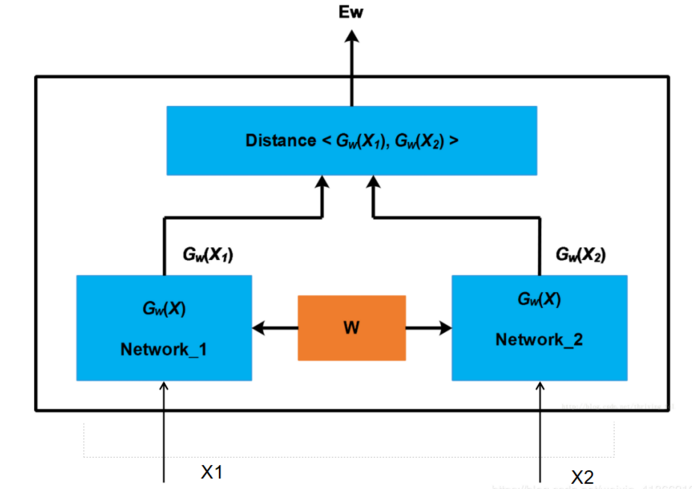
Siamese NNs
卷积神经网络学习笔记——Siamese networks(孪生神经网络) - 战争热诚 - 博客园
通过两个相同的网络来对比学习同一类物体